Beautiful Evening

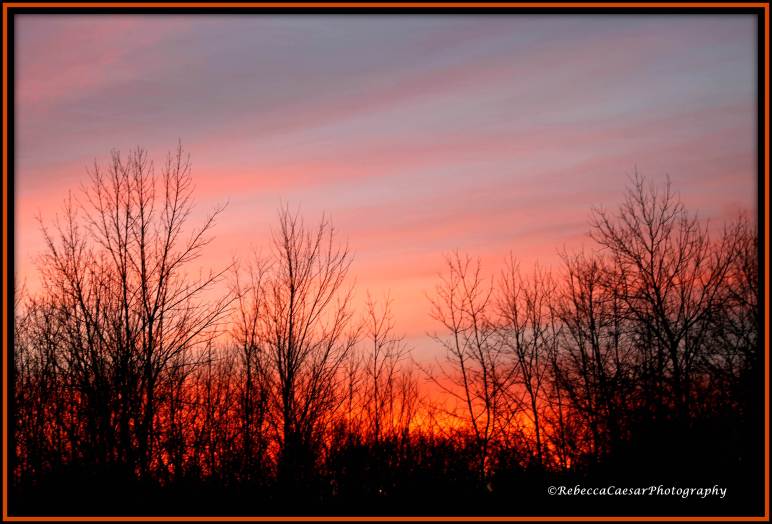
Tonight’s sun set was beautiful. I just wished the mosquitoes had not come out so quickly. Ugh!  Oh well… I hope everyone had a great day.  The next few days here in Michigan are suppose to be warm but a chance of rain.

At least, there’s no snow in the forecast. I always find rainy days to be inspiring.

Until next time…peace.

Dryad’s Saddle: A Fascinating Fungus

Spending time in the woods is my way of relaxing. One of my favorite aspects in nature to photograph is fungus. I love to photograph mushrooms; they just amaze me. Walking through the woods the other day I came across the beginning sprouts of a Dryad’s Saddle.

The Dryad’s Saddle is a fungus. The correct terminology for the Dryad’s Saddle is a Polyporus squamosus. The fungus has also been referred to as the Pheasant’s Back mushroom due to the appearance resembling a pheasant. (Personally, I do not see the comparison).

The word Dryad actually has a root in Greek mythology. As the myth goes, the Dryads could actually ride the mushroom. The shy, legendary Dryad is a female tree nymph or tree spirit; the supernatural being is tied to their tree homes. As a writer, I love when fungus or other aspects of nature has a connection with old myths or folklores. My imagination can run wild with these types of descriptions.

The Dryad’s Saddle mushroom will grow in dead logs or tree stumps. The fungus usually is connected at the base or inside an indentation in the tree. However, others have been spotted right on the ground. The ones on the ground are usually a single mushroom. The Dryad’s Saddle is a common sight throughout North America, Asia, Europe, and Australia.  I am amazed that this fungus is known throughout the world, not just here in Michigan. The first description of the Dryad’s Saddle was by William Hudson who was a British botanist dates back to 1778,

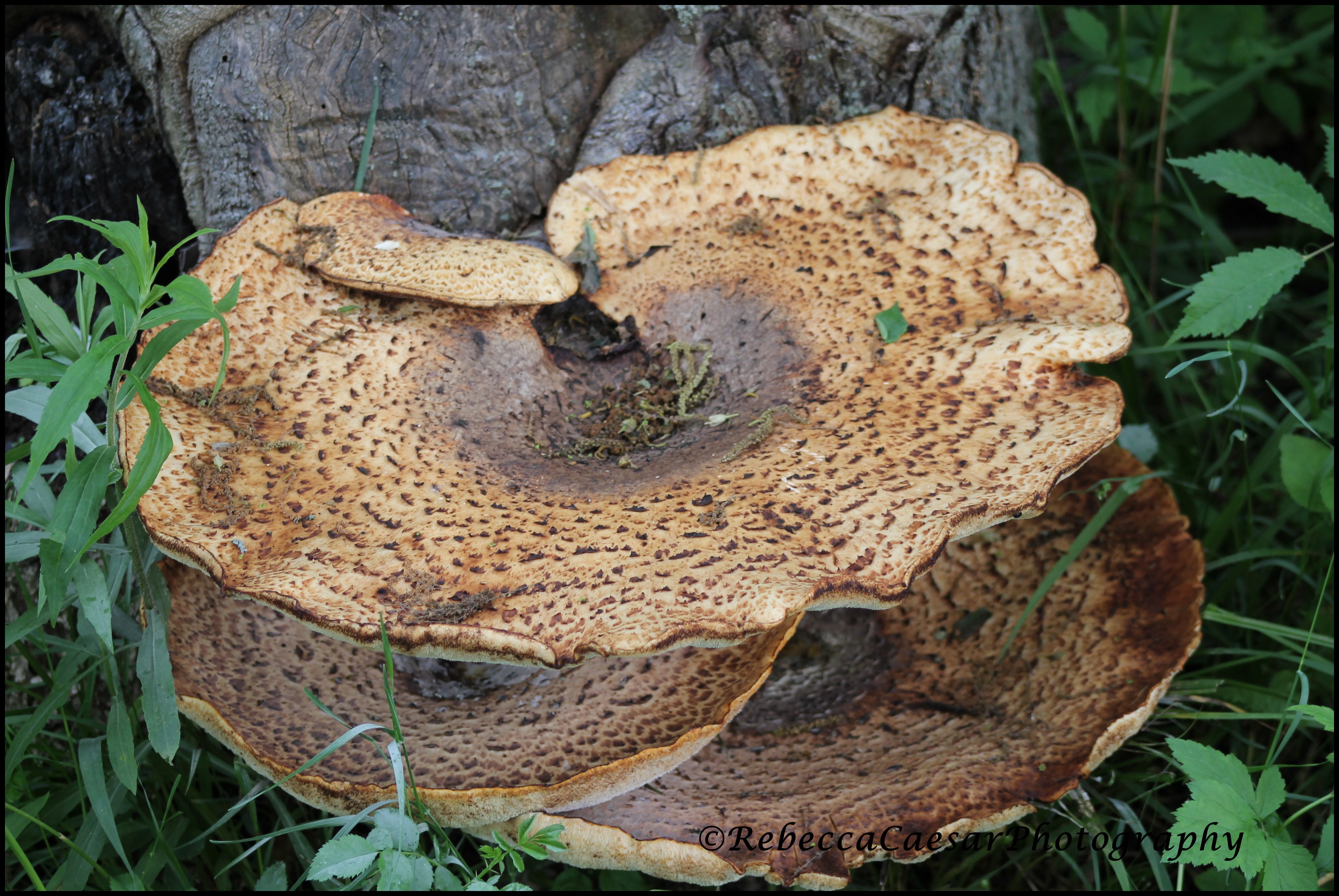
The body of the Dryad’s Saddle when fully grown can bracket outward into almost tiers. The tiers are close together and start out as thick, short tubes. The tiers have squamules which are like scales on the top layer of the mushroom. Depending on the area, the colors can vary from white, cream or yellowish.

Dryad's Saddle

(Fully grown Dryad’s Saddle from last summer).

As the Dryad’s Saddle continue to grow the upper body can expand out to approximately 20 inches. The Dryad’s Saddle is an edible mushroom. I have not tried to eat this type of mushroom. I tend not to cook anything unless I know exactly what I am doing. Yes, I fear food poisoning.

So the next time, you are wandering through the woods look around for a Dryad’s Saddle. The beautiful mushroom may actually be ridden in on a tree nymph.

Until next time…peace.

Things I Learned On My Hike Today

I love being outdoors; wandering around in the wooded areas has always been one of my favorite activities. So, here are some things I learned on my hike today.

1. In the back area, the Maple River breaks off into smaller creeks. One of these creeks are located on the back property. I love going down there to photograph wildlife.  Jumping over the small opening that leads to the creek was a lot easier when I was sixteen. I made the jump for the most part; I just got stuck in the mud. Oh well, my boots can handle it. I wouldn’t expect anything less for springtime in Michigan.

The Creek

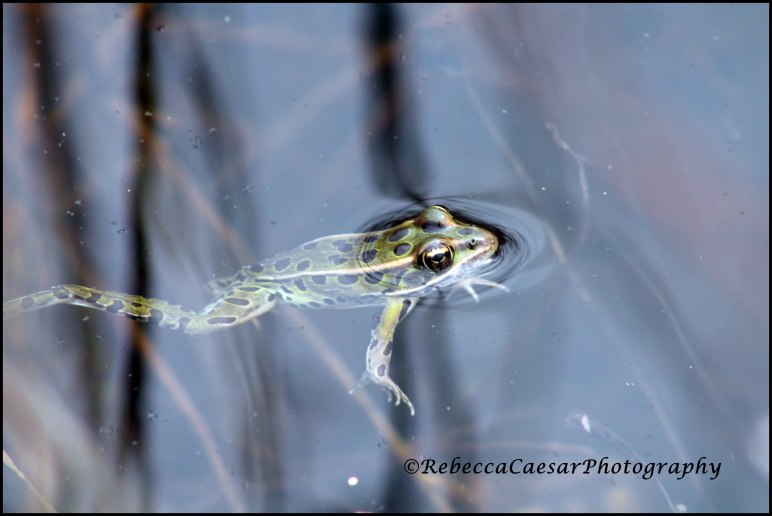
  1. The smallest little creatures can cause me to jump if I am not paying attention to the trail. Yes, this tiny frog about gave me heart failure.

Frog in the Trail

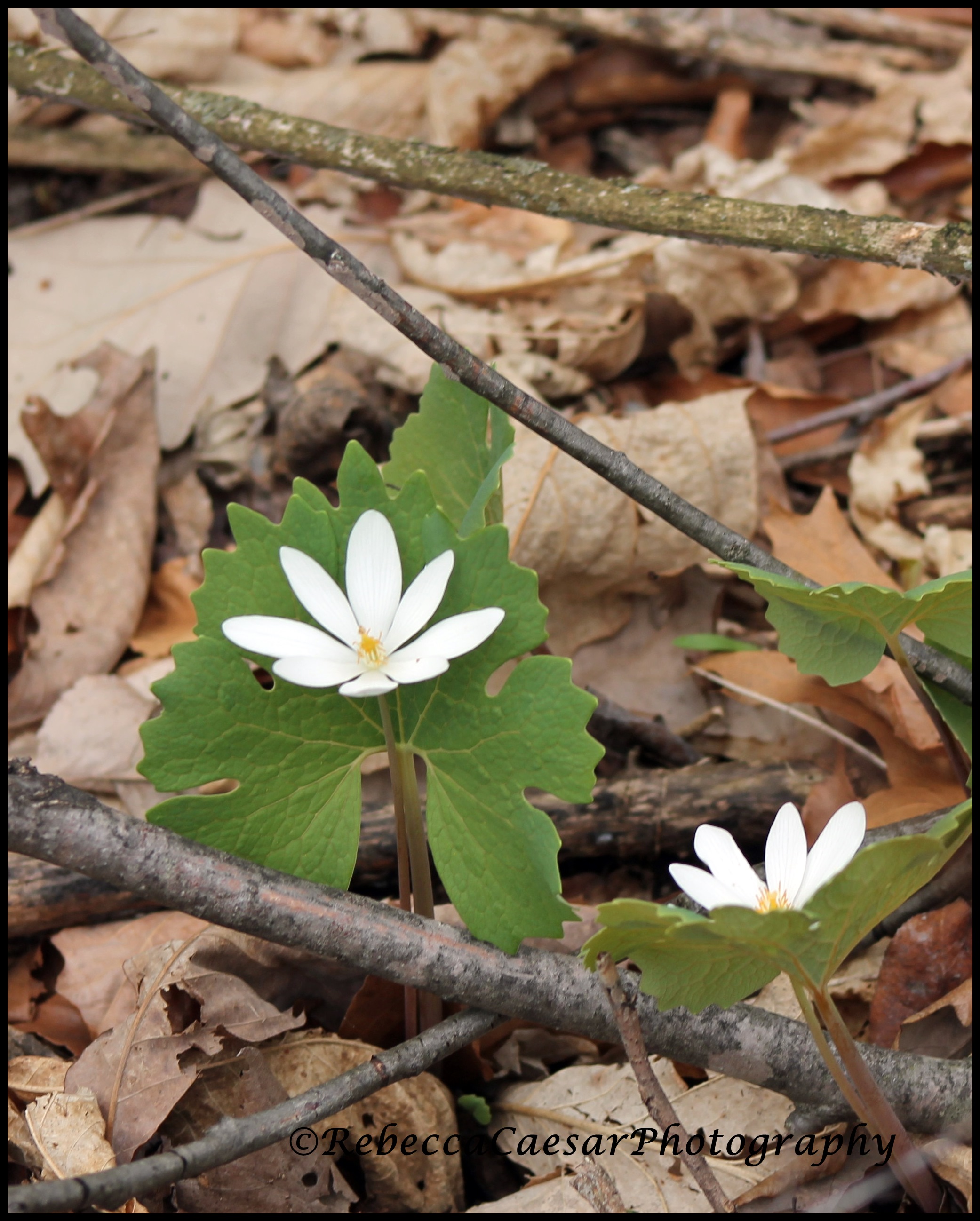
  1. The flowers popping up all over on the dull, muddy grounds are a welcome sight. The small beauties stand tall against the last remnants of winter.

Wild Flowers

  1. The most unusual places can provide the biggest inspiration. I admit there are days where I could just spend hours sitting in the middle of the woods. (I need to remember to carry a note pad with me.) Being outdoors is good for my creative soul.

A Place in the  Woods

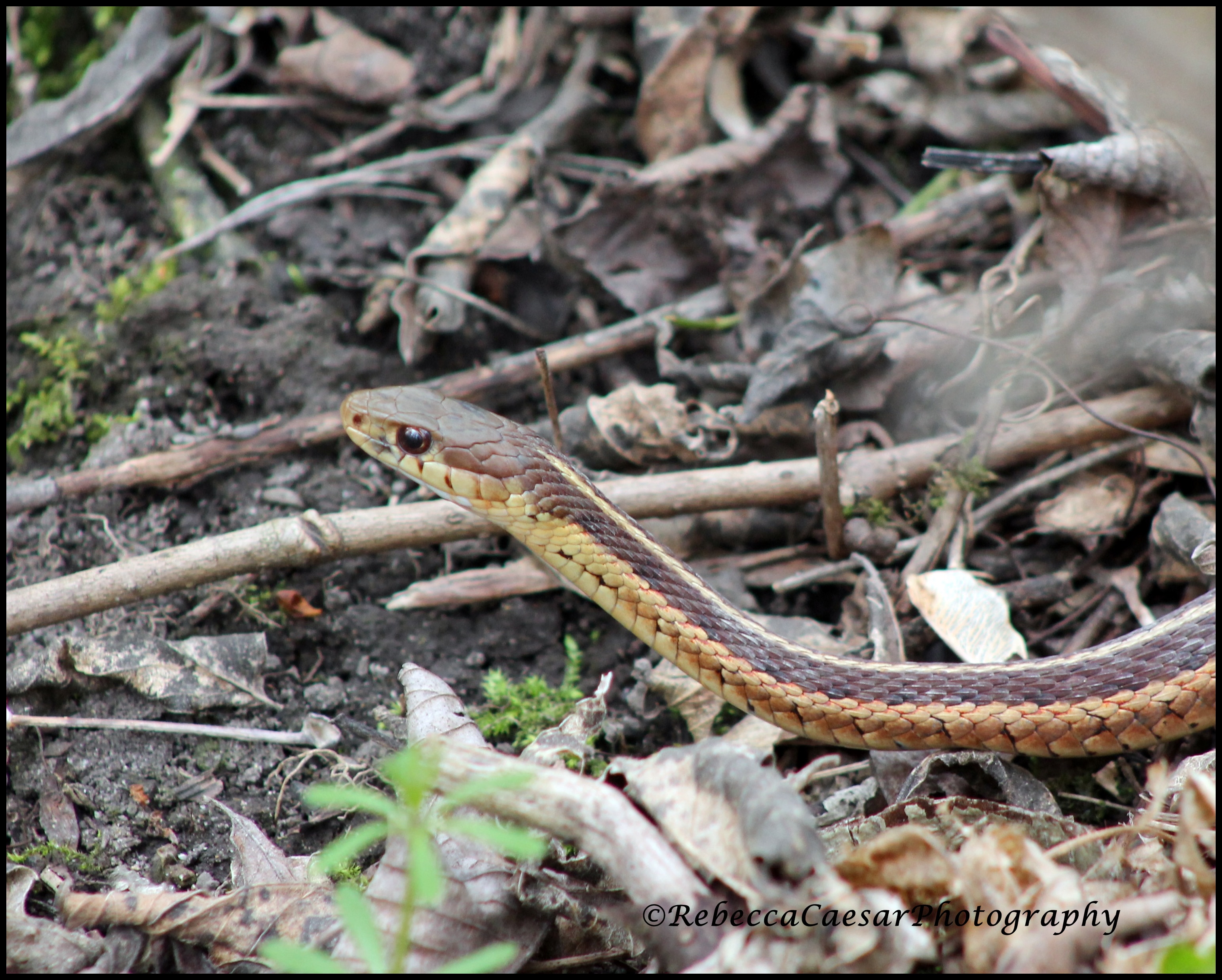
  1. The snakes are out. I am not really afraid of snakes especially this harmless Garter snake. But I am concerned I will accidently come across one that is just “not nice”. Growing I was always told about poisonous snakes, I think the stories are always in the back of mind. The only snake in Michigan that is poisonous is the Eastern Massasauga Rattlesnake. Or commonly known as the Michigan rattler is known to be a rare sight. But they do like the wetlands and the wooded areas which is where I frequent. I have never come across one in the wild.

Garter Snake Garter Snake

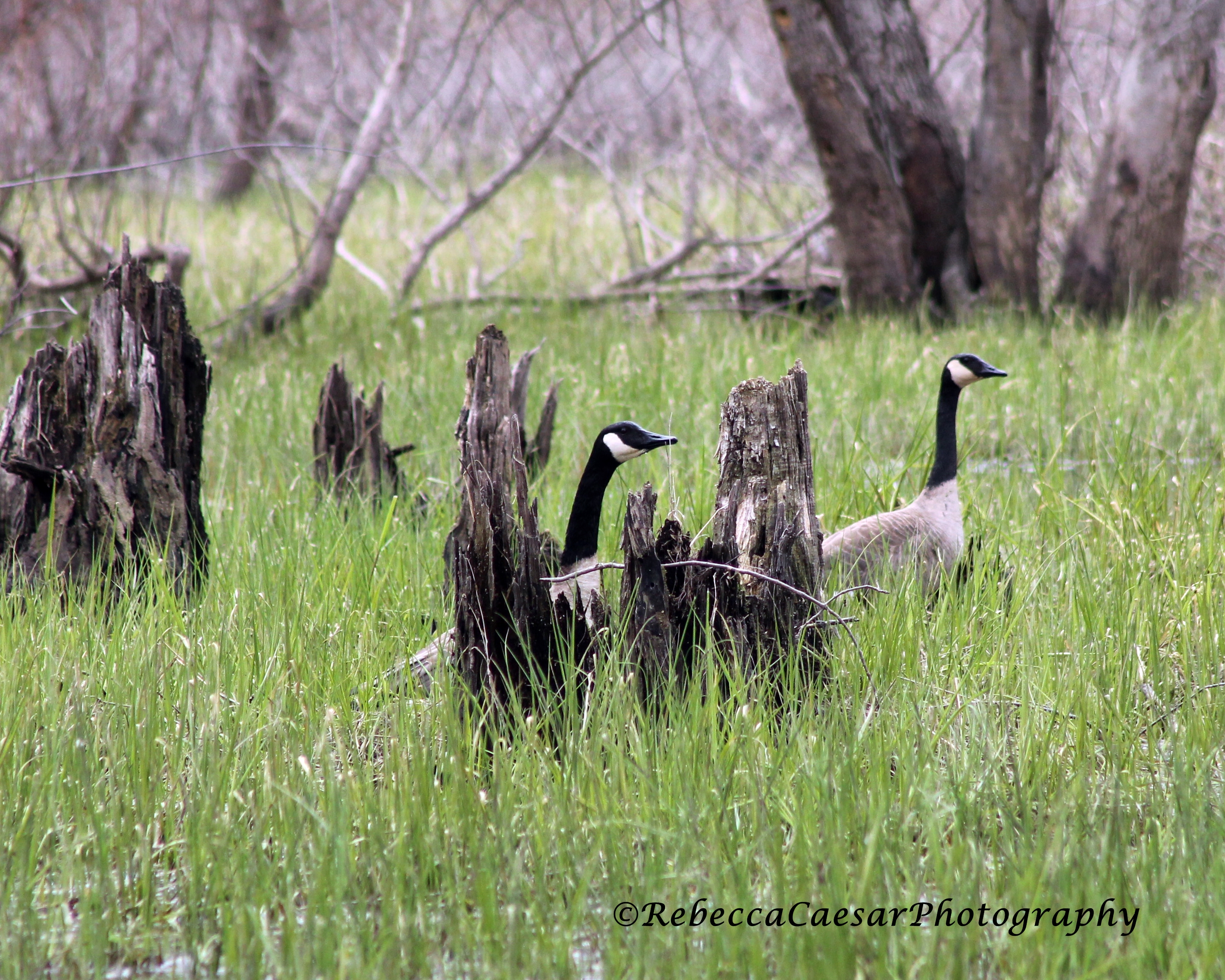
  1. I came across this wonderful pair of Canadian Geese who were not happy with my presence. They were both very vocal. I am assuming she had a nest nearby; I didn’t want to disturb her too much.

b2

  1. Even in the muddiest water, there are signs of life.

Snail

I hope everyone had a chance to get out and enjoy the sun today. Now, the sky is beginning to cloud over; there’s a 90% chance of rain for the overnight. So, I am glad I was able to get out for a couple of hours. I can fill the rainy days with writing.

Until next time….peace

What’s the Sparrow Watching?

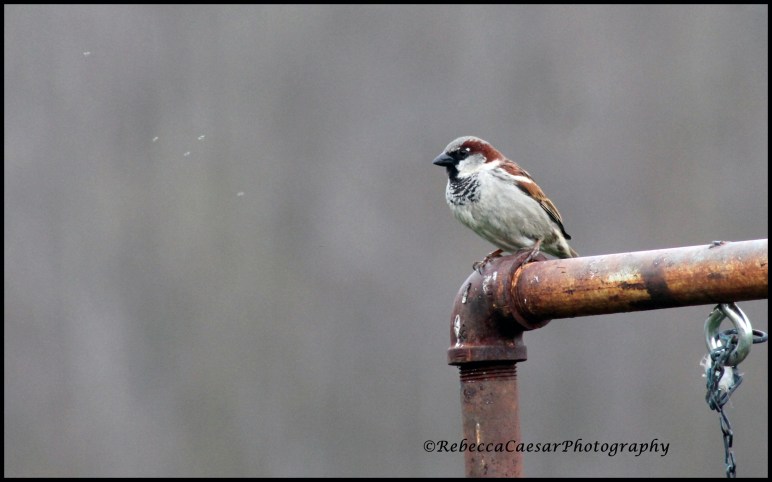
I was out taking photos early this evening. Being a cool Michigan day, I did not see a lot of wildlife moving around. So, I decided to spend time photographing the various birds that come to my feeder on a daily basis.

The Sparrows this evening drew my attention immediately. The little birds were all lined up on top of my feeder bar which holds various feeders, suet, etc. I could not see what the Sparrows were watching.  Yet, they would move their heads from one side to another. Of course, I just began snapping photos while I watched them.  I was instantly intrigued.

Once I was able to view the photos on my computer screen, I realized the Sparrows were actually watching little bugs. From where I was standing, there was no way for me to see the little bugs flying around them. I cannot tell you the type of bugs.  I barely can see them in the photo.  I just found the situation interesting.

I guess, you need a long lens and a computer scree to get a “bird’s eye view”.

Until next time…peace…

Save the Frog Day

I was just informed that today, April 25, 2015 is also “Save the Frog Day”. I absolutely love frogs. During the warm months, I have all the windows open and the frogs “sing” me to sleep at night. There’s just something about listening to frogs (and crickets) on a warm summer night to remind me why I live in the country.

Why Have a Save the Frog Day?

Amphibians are considered to be one of the most endangered little creatures on the planet. In fact, over “1/3 of the world’s species are on the brink of extinction” (SavetheFrog, 2015). I cannot imagine a world without frogs. Their “voice” would be gone forever.

The Threats

Of course, the main threat to frogs comes from humans. Humans have caused reduced habitants, pollutions from various pesticides and over harvesting for food consumption. Climate change and infectious diseases also play a part in the reduction of the amphibian population. Often there is a combination of two different factors to cause a decrease in the frog population. A reduced immune system due to a pesticide can leave a frog susceptible to infectious diseases.

How to Help

One of the best ways to help is by being aware of the situation. Participate in local recycling programs; less pollutants and debris in the environment is a major step in the right direction. Properly dispose of household chemicals, unused paint, and other hazardous materials at proper collection station. When pollutants and pesticides get into the water; all wildlife is at risk.

If everything goes as planned, I am actually going to have a pond dug in my yard. There’s already a two ponds on the back property and the main creek runs through it as well. But I want a pond in my yard. Don’t get me wrong I love walking down to see all the wildlife. However, there are days were my schedule is tight; I still would live to be able to go out to view different creatures. Yes, I do plan to use the area for photography reasons.

Until next time….peace.

Source:

www.SavetheFrog.com  (they have free newsletter)


Go Birding Day

Today, April 25, 2015 is “Go Birding Day”. Other wards, the entire day is dedicated to watching our fine feathered friends. I am an avid bird watcher. I never started out as one; bird watching is form of recreation. Recreation is all about finding an activity to while not at work or meeting any other responsibility that seems to full our daily lives.

Over the last two years, I really have begun to enjoy all aspects of  bird watching. I never thought I would be the person who would actually go searching for a particular bird to view and photograph. My area in Michigan had a wet start with lots of standing water which brought a lot of new birds to my area. I have always enjoyed being outdoors and photographing wildlife; bird watching was just a new component of this activity.   Bird watching is also an activity that my mother can join.

Equipment Needed for Bird Watching

The great thing about bird watching is that the type of equipment you invest in is up to you.  You can simply take a walk through your local park or hiking trail and try to figure out which little featured creature is making chirping noises in your direction.  Or if you really want to get into the activity you can buy expensive spotting scopes.

These are the items that I take with me:

  • A pair of binoculars
  • My camera which actually travels everywhere with me.
  • a field guide (I know a lot of people use apps which is great, but mom and I like looking at the book to see what species we are viewing.)
  • Pencil and notepad (I take this along to jot notes; I use a lot of my experiences for writing and I want to remember everything that I view).
  • Water (I have recyclable container that hooks to my camera bag. It is important to stay hydrated while out walking around especially if you are in a wooded area).
  • Cell phone (I turn mine on silent while I am out walking. Accidents can happen; a slip and fall can ruin your hike. A cell phone is just extra precaution in case of emergency).

Know the Area

I am fortunate.  I live in a rural area which is surrounded by wetlands along side the Maple River; the common Michigan river flats are all around me.  I spend a lot of time on the back property where I can view numerous birds and other wildlife.  But I do like to venture out into other trails and preserves.  When I am getting ready to go to a new trail, I download the map either to paper form to have with me or to my phone.  I know a lot of the trails are marked, but I like the extra precaution.

Safety

Remember to wear appropriate clothing and footwear.  The trails can be long; you want to make certain that you are comfortably dressed.  Also, obey the signs; the signs are there for your safety.

These are only a few aspects of bird watching. Have fun and be safe as you look for that rare species which only turns up doing summer months when the birds migrate back to the area.


Happy Earth Day!

Happy Earth Day!!

    Why celebrate Earth Day? I think for me, the question would be, “why wouldn’t I celebrate Earth Day?” As a lover of the great outdoors, I think we should all be aware of out impact on our local environment and the planet as a whole. If everyone would just take the time to participate in some small way; the overall impact would be great. I have seen firsthand how trash, pollutants and debris can litter up the local landscape, river and wooded areas. Begin in small ways by recycling plastic bags or magazines; there are drop off points throughout all communities.

Consider these other ideas that can be done as well; get the kids to help. Getting children involved with a variety of activities can help bring awareness to the environment and nature while having fun.

  • Pinecones and Peanut butter feeders.

I love to feed the birds. I think feeding the birds is both beneficial to them and myself. One way to feed the birds is by making little pinecone feeders. We use to do this when I was a child. We would take pinecones and coat them with a thick layer of peanut butter then add seeds. I actually still do this sometimes; I even add raisins to the mix as well. Then, I hang them in the trees around my house.

  • Go outside and explore.

I loved being outdoors as a child, I would spend hours exploring, imagining and having fun with friends and family. I still enjoy being outdoors today. Spending a day in nature is relaxing. I just grab my camera and go.

But I also enjoy just sitting on my porch and listening to the different sounds that nature makes. So, if you get a moment take a walk to celebrate Earth Day. I understand the weather may not be ideal. Here in Mid-Michigan, I actually saw snowflakes this morning. But if you are able, get outdoors. Even if your time is spent in the backyard, walking around the block or to a local park, there’s always something to see.

  • Collect nature items (but be cautious).

When you are out exploring collect little nature items such as small rocks, fallen leaves and acorns but at the same time be careful. Some items in nature are better left alone especially the poison ivy leaves. Also, leave flowers and growing plants alone. The joy is to watch these natural items grow. Go home and look up your new finds on the computer or in a book. Have the children make a scrapbook or design a keepsake shoe box to store items in.  The small keepsakes could spark a lifetime of interest in environmental sciences.

  • Take photos.

You don’t need a fancy camera to take photos of nature. You can give kids cheap throw away cameras or use inexpensive digital cameras. Let your children take pictures of whatever interests them. You can always print the pictures off and store in scrap book. Have the children explain why they took this picture. A simple trip outside becomes a keepsake.

  • Plant a flower or plant a tree.

If weather permits plant a flower outside or a tree, make the planting a yearly event. Here in Michigan especially with sign of snow, I cannot get outdoors to plant anything new. In the past, I have planted flower seeds in organic cups and let the seeds start to grow. Once the weather is agreeable; I have taken the little cups and plant them directly into the ground.

These are only a few ideas; there are many others that can be done. Start a tradition to celebrate Earth Day with a small activity. But get outdoors as much as possible; the benefits go way beyond viewing nature.
Happy National Bat Appreciation Day!

Happy National Bat Appreciation Day!

I like bats when they are outside. It’s when they are flying around in my house that I have a problem. But I always safely catch them and release them back outside.

I was surprise to find out that Michigan has nine different bat species.

The different bats include:

  • Big Brown Bat (Eptesicus fuscus)
  • Little Brown Bat (Myotis lucifugus)
  • Eastern Red Bat (Lasiurus borealis)
  • The Hoary Bat (Lasiurus cinereus)
  • Tri-Colored Bat (Perimyotis subflavus)
  • Silvered Haired Bat (Lasionycteris noctivagans)
  • Indiana Bat (Myotis solidalis)
  • Evening Bat (Nycticeius humeralis)
  • Northern Long-Eared Bat (Myotis septentrionalis)

Here in Michigan, the Little Brown Bat or Myotis lucifugus is the most common.  The Little Brown Bat is a relatively small mammal with an olive-brownish to dark yellowish brown colored coat.   In Latin, the word Myotis means mouse ear which is great for these Little Brown Bats since they do look like they have little mouse ears. I have photographed a few in my time. Even though I know they are only insect eating creatures; I am still cautious when approaching them.  I guess I have heard too many urban legends in my time.

According to the Michigan DNR website, “Little brown bats use echolocation to find and capture prey. They emit pulses of high frequency sound (20-130 kHz) that bounce off nearby objects. The bats then use the echoes to determine the object’s distance, size, and shape. They feed primarily on aquatic insects, including mayflies, caddis flies, and stoneflies. They will also feed on other flies, wasps, moths, and beetles to supplement their diet. Typical summer foraging areas include forest edges, along streams and lakes, and sometimes in small cultivated fields. Young little brown bats can eat up to 1.8 grams of insects/night; lactating females can eat up to 3.7 grams of insects/hour due to increased energy demands” (2014).  Of course, I wish they would eat more mosquitoes in my area.

Source:

http://www.michigan.gov/dnr/0,4570,7-153-10370_12145_12205-70016–,00.html


The Swans Are Back

I was happy to see that the swans are back. The return of the Trumpeter Swans reminds me that spring is truly here. I love listening to the swans (well, I enjoy listening to most wildlife).  But the chatter between the two swans have while swimming is fascinating.  The calls back and forth to each other is almost a low nasally honking.  The pair of Trumpeter Swans, the largest waterfowl in North America never stay in the area. I am assuming, the river flats are just a stop until they reach their final destination. But I do love viewing them every year.

The river flats surrounding the Maple River are high right now due to the rain. The rain is normal for this time of year here in mid-Michigan. I was disappointed to see my favorite hiking trail on the back property flooded over this afternoon. But I am sure the little wood ducks are very happy with the extra water.

Until next time…peace


Another Spring Day?

Another Spring day here in Michigan.  I say this with a tone of sarcasm. Even though the weather is really typical for Michigan. I woke up this morning to snow.  Not much just enough to let me know the air would be cold and damp all day. In fact the snow has actually disappeared already.  According to the weather report, there is a promise of warmer weather coming in.

So, I took my own advice from yesterday’s blog and went for a walk. The walk was a bit “crispy” but I enjoyed seeing all the wildlife. I was able to view a magnificent Sand Hill Crane fly over the back property. She (no I don’t know if the crane was a female for certain, I don’t have that knowledge) was spectacular to watch. Her enormous wind span is such a sight. I could watch cranes all day especially when they use that low throttling call. I find their “song” beautiful.

The Canadian Geese were making their voice heard down on the river flats as I approached. I accidentally startled a small pair of wood ducks.  When I returned to my house, I noticed a small herd of Whitetail Deer (around 12) were making their way across the field. I am happy to see the wildlife returning to the area. As more and more wildlife becomes visible or heard, I know the warmer weather is fast approaching.